Service
Comprehensive Eye Exams
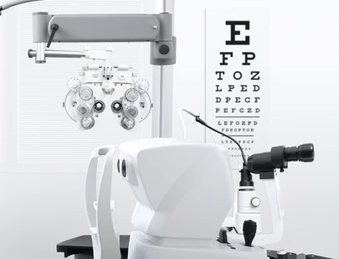
We use state-of-the-art technology to provide comprehensive eye exams. We use a personalized approach and use the results of your tests to establish preventative measures to ensure optimal ocular health and the best vision solutions to suit your needs.
Eye Condition Treatment
Eye conditions can range from mild to severe. While some are chronic, others may resolve on their own. Here’s a short list of common eye conditions we treat, such as astigmatism, dry eye syndrome and presbyopia.
CATARACT SURGERY
Cataracts is one of the leading causes of blindness in Ethiopia. Cataract surgery is being performed via Phacoemulsification and via SICS (Small Incision Cataract surgery).
Within our eyes, we have a natural clear lens that helps us see. When this lens becomes yellow and cloudy, it is known as a cataract. Cataracts occur for many reasons, such as from aging, increased ultraviolet (UV) exposure, genetic predisposition, medication-induced, etc.
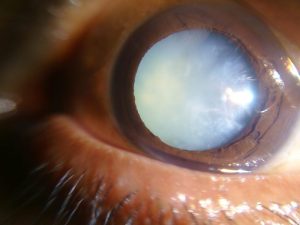
- Blurry vision despite wearingcorrect glasses prescription
- Increased glare and halos around lights
- Poor vision in dim light environme
- nts
- Frequent changes in your glasses prescription
An ophthalmologist or an optometrist will know whether or not you have cataracts after examining your eyes. They will grade your cataracts and help you decide whether they are visually significant and require surgical removal. Everyone’s cataracts progress at different rates. If you have been diagnosed with early cataracts, then it is a good idea to have annual eye exams so that your doctor can monitor the progression of your cataracts.
If left untreated, cataracts will worsen over time and may lead to permanent vision loss or even blindness. It is important to see your eye doctor regularly in order to detect cataracts as early as possible and to plan an effective treatment method.
Cataracts can be treated effectively through surgery. Cataract removal surgery is a safe, routine procedure performed to remove and replace the clouded lens in your eye.
Cataract surgery is generally considered to be low-risk and is performed as day surgery under local anesthetic. The procedure typically takes around 30 minutes, and your vision should improve within a few days.
After your surgery, our Vision Care Centre optometrists will monitor your condition with regular follow-ups and exams. The standard schedule is a two week, and a one month follow up to determine the effectiveness of the surgery and to counter any complications.
At the one month follow up, your eye health should be stable enough to measure your new prescription, and at that point, we will recommend replacing your current glasses or contacts with new ones.
SQUINT SURGERY
The main goal of squint surgery is to give you confidence to live your life without a squint getting in the way. Different people are affected in different ways, and so the goals of surgery are unique to each person.
Squint is the term used when the eyes point in different directions. One eye is out of alignment, i.e. one eye looks straight ahead whilst the other may point inwards (esotropia), outwards (exotropia) or even vertically, up or down (hyper- and hypotropia). Squints may be obvious all the time (constant) or only seen from time to time (intermittent).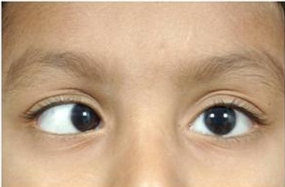
A squint can occur for a number of different reasons
- One or more of the muscles controlling the eye may get damaged
- One of the eye muscle control centres may have been poorly developed or sustain a new damage
- A poorly sighted eye, from any reason, may interfere with the brain’s ability to keep the eyes together and may start turning in- or, more commonly, outwards
A large squint can be a cosmetic problem. Research has shown that patients with strabismus report that it can affect their quality of life, how they feel about themselves and in some cases, say it has led to depression and anxiety. Many of our patients say they feel more confident after their operation and are delighted with the results.
A new squint, or one that is getting worse may cause double vision or headaches and a feeling of ‘eye strain’. Double vision can severely disrupt the ability to read, walk, drive and perform common activities.
The goal of strabismus or Squint surgery, a popular kind of treatment for crossed eyes, is to realign the eyes by modifying the position or tension of the eye muscles. It usually involves the shortening, lengthening, repositioning, or loosening of the eye muscles and is carried out by an ophthalmologist. Any eye muscle surgery is often performed under anesthesia, and the recovery time may differ. Binocular vision can often be restored, and eye alignment improved with strabismus surgery, but further therapies may be required for best results.
PTERYGIUM SURGERY
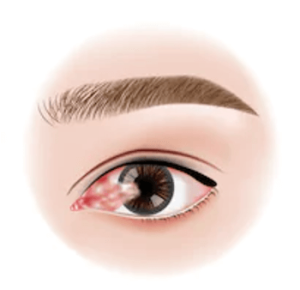
A growth that starts on the clear tissue of the eye that can spread to the cornea. The noncancerous, triangular growth may occur on one or both eyes. It's more common in people who spend a lot of time in the sun, such as those who work outdoors. The painless growth may be slightly raised and contain obvious blood vessels. It may cause irritation and possibly affect vision.

GLAUCOMA SURGERY
Glaucoma is the second cause of blindness in Ethiopia. Surgery is often needed to prevent progression of the disease.
Glaucoma is a set of conditions which results in damage to the optic nerve. The optic nerve is located at the back of the eye, and it transmits visual signals from the eye to the brain helping in visualization. Damage to the optic nerve could result in blindness. In glaucoma, the optic nerve is often damaged by an unusually high pressure exerted on it. This damage to the optic nerve could ultimately result in blindness.
Glaucoma is also said to be the leading cause of blindness in adults. In a few types of glaucoma, the patient shows undetectable to no symptoms. The impact is steady to such an extent that it would not be noticed until the condition is at a serious stage.
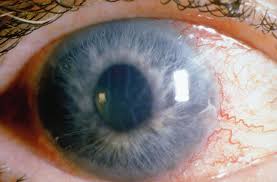
There are many types and degrees of glaucoma, and their symptoms range from nonexistent (initially) to severe. These symptoms most often include:
- Loss of vision
- Blurry vision
- Persistent headache
- Eye redness
- Stomach upset, nausea and vomiting
- Pain in the eye
- Early Presbyopia
During a glaucoma evaluation, several tests will be conducted including: a formal peripheral vision test, Intraocular pressure measurement, the thickness of the cornea, visualization of the drainage at the angles, and imaging of the optic nerve. These tests are done to follow and compare over time to monitor for progressive damage or stabilization of the disease. There is no cure for glaucoma, but there are effective treatments. The majority of cases can be controlled and therefore, reducing the loss of vision. Glaucoma does require long term ongoing eye care.
The damage caused by glaucoma can’t be reversed. But treatment and regular checkups can help slow or prevent vision loss, especially if you catch the disease in its early stages.
Glaucoma is treated by lowering intraocular pressure. Treatment options include prescription eye drops, oral medicines, laser treatment, surgery or a combination of approaches.

Artificial Eye (Prosthetic Eye)
Blinding eye disease can often lead to a poor cosmetic appearance and severe chronic pain arising from the non-seeing eye. A sunken eye socket is an almost universal complaint from patients with non-seeing eyes which result from trauma or disease. Often, the best solution to control the pain or to improve aesthetic appearance is to remove the eye and reconstruct the socket with an implant which allows an artificial eye to be fitted.
A prosthetic eye may be necessary for patients who have had a severe eye injury or eye trauma, or have experienced a serious eye disease, such as cancer of the eye, an uncontrollable infection, end-stage glaucoma and unmanageable eye pain in a non-seeing eye.
In the above cases, it is often impossible to save the eye, in which instance, surgical eye removal is necessary.
The most common procedures carried out to remove a damaged or diseased eye are enucleation and evisceration surgery. Once the eye is removed, the surgeon normally fits the patient with a custom-made implant within the orbital tissues. This acts as a volume replacement to prevent the socket from appearing hollow and sunken. Once the socket has settled, a prosthetic shell, which may also be referred to as an artificial eye, glass eye or ocular prosthesis.
Prosthetic eyes do not restore a patient’s vision, but they can provide them with a more natural looking appearance, since they can be custom-made to match the size and color of other, working eye. This means that it is often difficult for other people to notice that a person has an artificial eye.
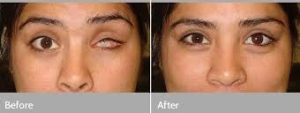
The affected eye will be covered with a dressing which helps to reduce swelling and will be removed after a day. The eye socket will appear reddish but becomes pinker as the area begins to heal. Bruising and swelling of the lids can occur, getting worse for the initial few days following surgery, before gradually improving.
It is normal for the eye to feel sore and painful. Having headaches are also common for the first couple of days after the surgery, but a doctor can prescribe you some painkillers to help manage the pain. Nausea might also occur as a result.
The clear shell which was fitted during surgery will be visible. It has a hole in the middle, which assists with drainage and airflow and also allows medications to be administered. You must keep this in your eye socket until it has healed and can tolerate a custom eye to be fitted.
Patients will be shown how to clean the eye socket area, as well as receiving plenty of eye care advice on how to look after the shell. For best healing, it is advised to keep the area uncovered once at home, however, patients can wear dark glasses until swelling has subsided.
Patients will be given eye drops or an ointment, which should be applied several times a day to prevent infection. Antibiotic treatment and pain medication may be prescribed.
A follow-up consultation will be scheduled in and the doctor will examine the area, determining whether you are healing well.